Linux Infrastructure Hardening and SIEM Orchestration#
Compliance status: 83%
Starting baseline: 26%
Framework: CIS Arch Linux Benchmark
Environment: Arch Linux security lab with Wazuh-based monitoring
1. Executive Summary#
This project documents the hardening of a newly deployed Arch Linux system using CIS-aligned controls and centralized monitoring through Wazuh. The goal was not only to raise the benchmark score, but to build a host that was easier to audit, harder to misuse, and capable of producing actionable security telemetry.
Over the course of the engagement, I remediated more than 100 configuration issues spanning identity management, filesystem protections, kernel behavior, and network exposure. The final system reached 83% CIS compliance and produced materially stronger audit coverage through auditd, Wazuh SCA, and policy-driven service restrictions.
2. Technical Stack#
- Operating system: Arch Linux
- Monitoring platform: Wazuh
4.14.4deployed in Docker - Instrumentation:
auditd,libpwquality - Hardening controls:
pam_pwquality,systemd,sysctl,visudo,ip6tables - Automation environment: Fish shell for repeatable remediation steps
3. The Monitoring Dashboard#
Wazuh served as the operational center for the project. It provided a consolidated view of benchmark findings, agent health, vulnerability data, and MITRE ATT&CK-aligned detections, which made it easier to validate each remediation step against a measurable control outcome.
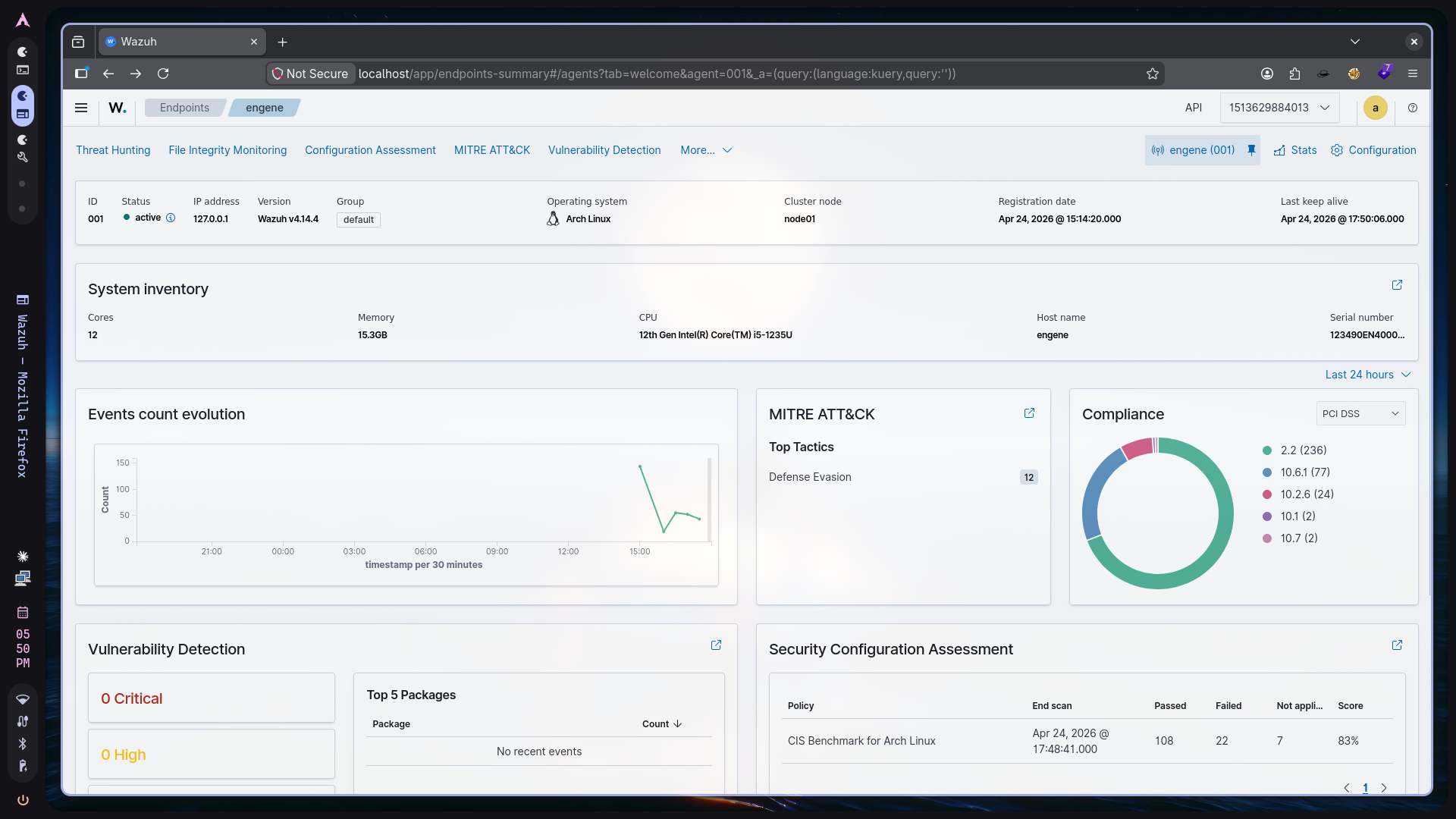 Figure 1. Wazuh dashboard showing the monitored Arch Linux endpoint and active security telemetry.
4. Implementation Phases#
Phase 1: Instrumentation & Baseline#
The first step was to deploy the Wazuh manager and enroll the Arch Linux host as an agent. Once the agent began reporting, the initial Security Configuration Assessment established a baseline score of 26%. Most failures were concentrated in authentication controls, service exposure, and auditability.
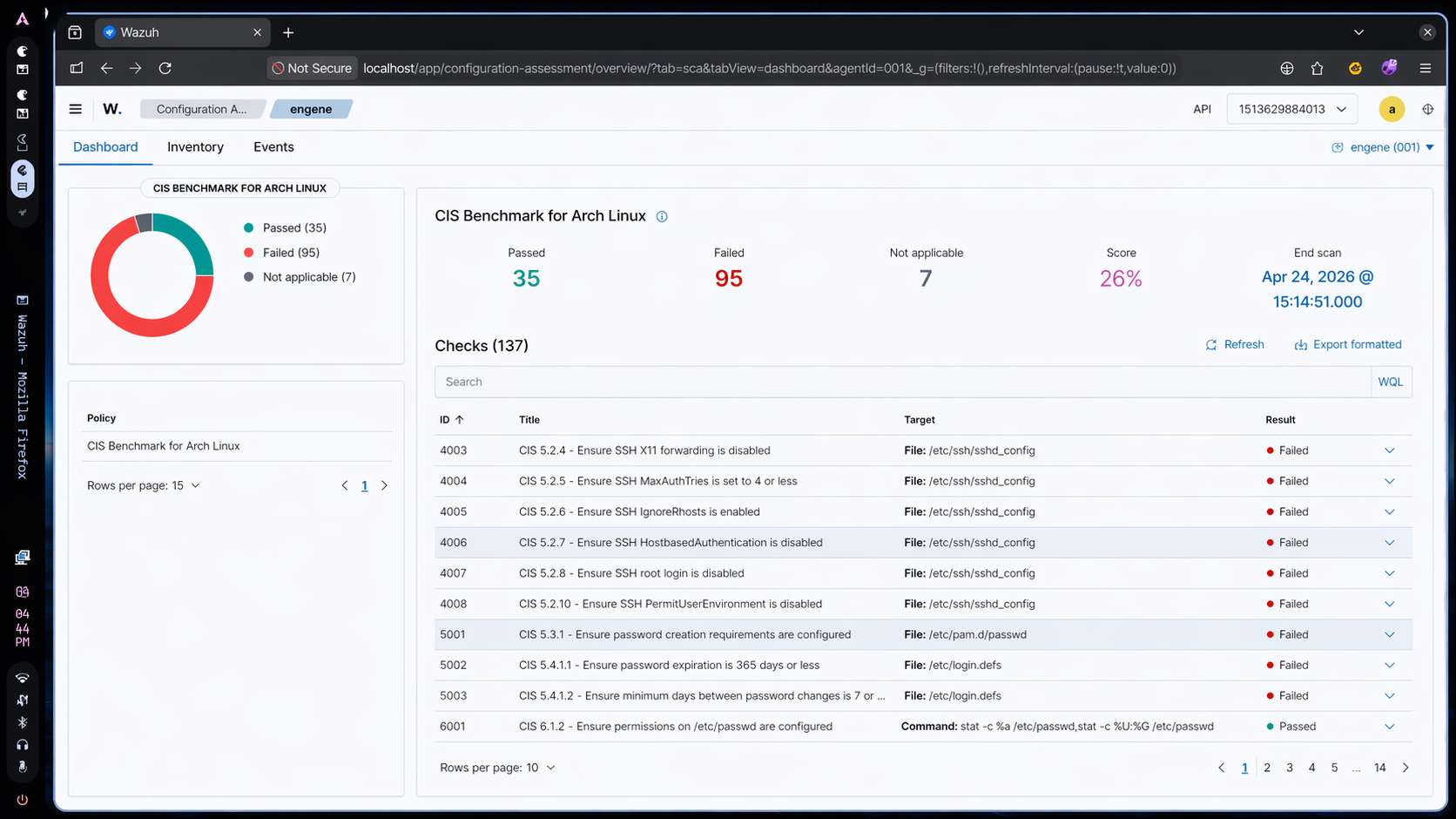 Figure 2. Initial CIS assessment showing low baseline compliance and multiple gaps in core host protections.
Phase 2: Remediation Sprints#
To keep the work structured, I grouped remediation into focused sprints based on control families rather than fixing findings one by one.
Sprint A: Identity and Access Management#
- Sudo hardening: Enabled
use_ptyand configured dedicatedsudologging to improve command accountability. - Privilege restriction: Limited
suaccess to thewheelgroup withpam_wheel.so. - Password policy: Enforced password aging and complexity requirements through
login.defsand related PAM controls.
Sprint B: Filesystem and Kernel Hardening#
- Mount restrictions: Applied
noexec,nosuid, andnodevon/tmp,/var/tmp, and/dev/shm. - Kernel module policy: Added
modproberules to disable unnecessary or risky filesystem modules and to block unauthorized USB storage support.
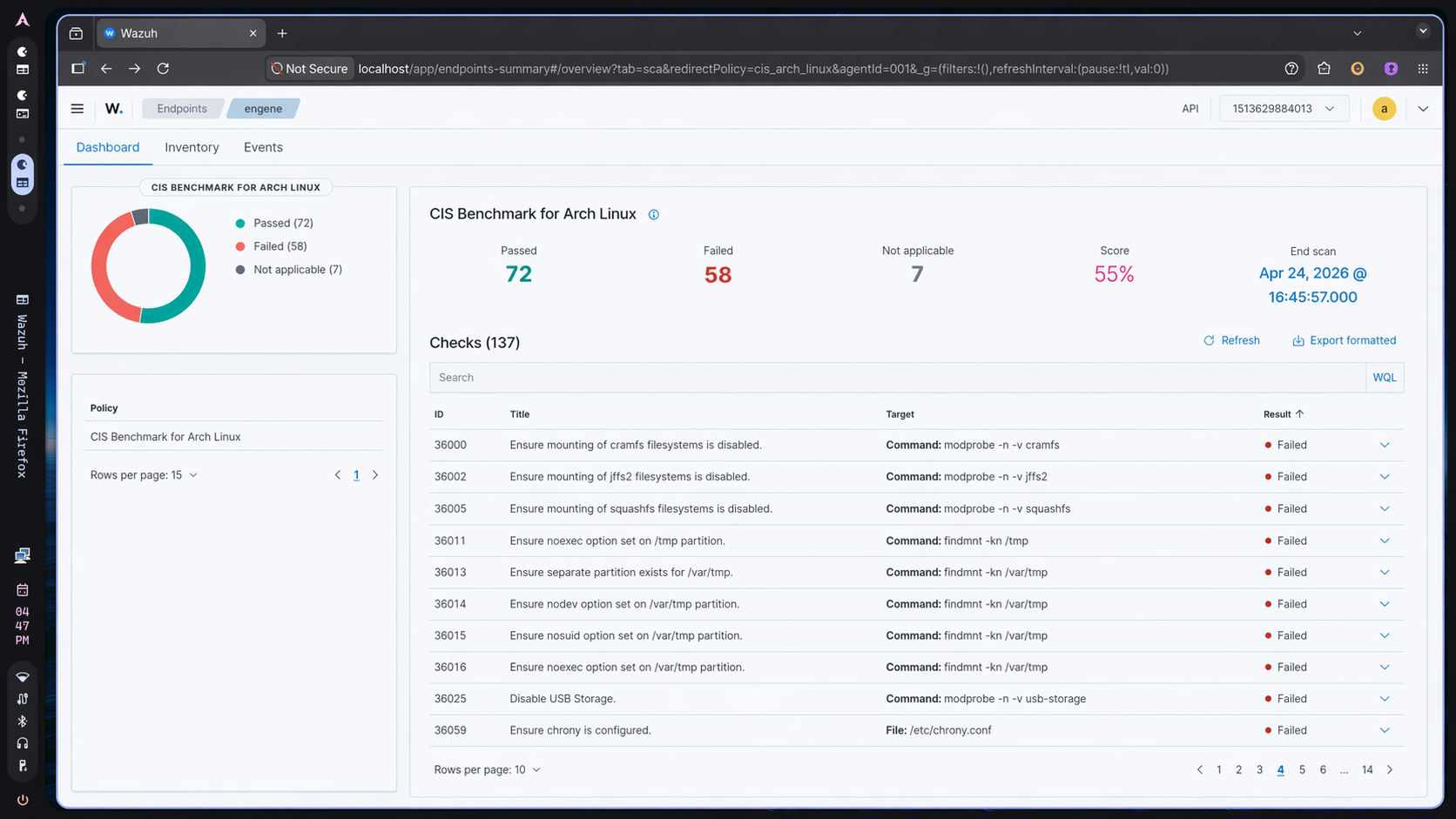 Figure 3. Mid-project assessment after initial filesystem, kernel, and service hardening raised compliance to 55%.
Sprint C: Network Surface Reduction#
- Service masking: Disabled and masked legacy services such as FTP, Telnet, SNMP, and HTTP where they were not required.
- Kernel network settings: Tightened
sysctlparameters to disable forwarding and reject unsafe redirect behavior.
Phase 3: Deep Telemetry & Auditing#
The final phase focused on depth of visibility. To address the more demanding CIS audit requirements, I expanded host-level telemetry with auditd and loaded more than 22,000 rules derived from the Neo23x0 baseline. That rule set captured high-value system events such as:
-k modulesfor unauthorized kernel module activity-k scopefor changes tosudoersand related privilege boundaries-k file_creationfor suspicious file creation attempts in restricted locations
5. Key Results#
- Compliance improvement: Increased the CIS score from
26%to83%, a gain of57percentage points. - Reduced attack surface: Removed or constrained common privilege escalation and lateral movement paths.
- Operational visibility: Established near real-time monitoring for host-level changes and audit events.
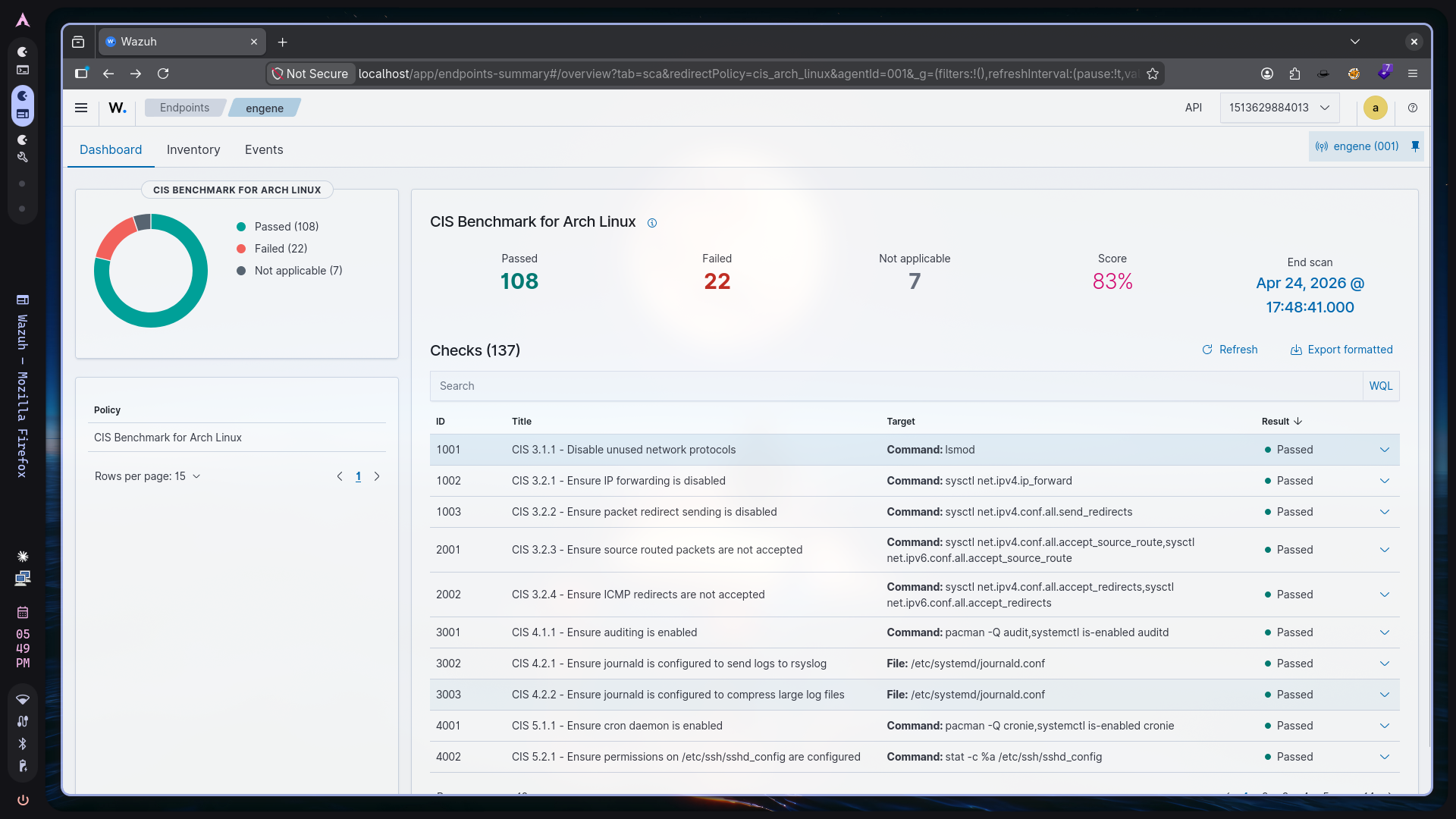 Figure 4. Final CIS assessment reflecting an 83% compliance score after remediation and audit expansion.
6. Lessons Learned#
- Minimal base systems still require strong control design: Arch Linux starts lean, but enterprise-grade hardening still depends on deliberate policy, logging, and service management.
- Benchmarking is most useful when paired with telemetry: Raising a score is helpful, but the more valuable outcome was the ability to observe and validate changes continuously through Wazuh and
auditd. - Automation matters: Using shell-based remediation reduced drift and made it easier to apply the same controls consistently during iterative testing.
7. Project Completion Checklist#
- Deploy Wazuh SIEM
- Agent Instrumentation
- Kernel Hardening
- Telemetry Enrichment
- CIS Benchmark Compliance (80%+)